- Dance
The living dance heritage of Bartók/ Beethoven/ Schönberg
by Production image © Herman Sorgeloos, Thu, Apr 23, 2026
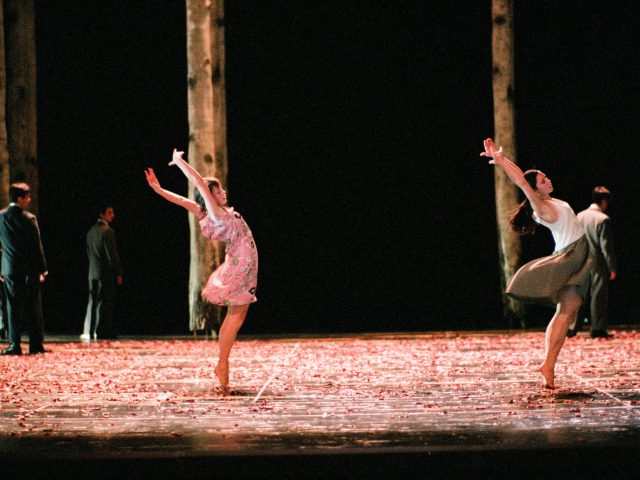
Following Mozart / Concert Aria’s, Rain, Fase and Bach’s Second Cello Suite, the dancers of Opera Ballet Vlaanderen once again bring choreographies from Anne Teresa De Keersmaeker’s rich oeuvre to life. Together, they form the repertoire programme Bartók / Beethoven / Schönberg.
‘There is nothing more contemporary than the body that incorporates the dance in the here and now,’ said the choreographer in an interview with Floor Keersmaekers (June 2019) about her Bartók / Beethoven / Schönberg. ‘The thing that intrigues me is the individual “now-power” by which a dancer internalises the choreography and lends it a contemporaneity.’
The three parts of Bartók / Beethoven / Schönberg are a living dance heritage. They are choreographies from different phases of De Keersmaekers’s artistic journey, which were brought together for the first time in 2006. The choice of music spans more than a century, from Beethoven’s Grosse Fuge of 1825 to Schönberg’s Verklärte Nacht (1899) and Bartók’s Fourth String Quartet (1928). Each choreography approaches the score in a specific way. The Fourth String Quartet focuses on its dance-like character. The intersecting melodic lines in Beethoven’s Grosse Fuge are entrusted to individual dancers, and in Verklärte Nacht, De Keersmaeker could not ignore the many themes and leitmotifs with which Schönberg set a poem by Richard Dehmel to music. Bartók / Beethoven / Schönberg is a richly contrasting encounter between three musical choices and three specific dance languages.
Antwerp | Gent
Bartók/ Beethoven/ Schönberg
Anne Teresa De Keersmaeker
