• Vonk
  • Performance

Tha path toward a new Rite of Spring

"You remain in a state of high tension for the entire piece."

by door Tom Swaak, Fri, Feb 6, 2026

What could a new Rite of Spring look like today, and what sacrifices do women make in 2026? These are the questions director Benjamin Abel Meirhaeghe explores in a rite of spring. Together with three female performers and drummer Lander Gyselinck, he searches for answers. We slipped into the first rehearsals. ‘I found that idea of sacrifice and transformation very beautiful.’

113 years ago, a ballet premiered in Paris that shook the worlds of music and dance to their core: Le Sacre du printemps, known in English as The Rite of Spring. Igor Stravinsky’s composition was shocking, ritualistic, overwhelming, fragmentary and, above all, intensely rhythmic. Not only is the score packed with time changes, the composer also layers clashing rhythms on top of each other or unsettles musicians and listeners alike by constantly placing accents on unexpected beats.

Stravinsky claimed that his music originated from a dream vision of a primitive society engaged in a grand ritual: a young woman was to be sacrificed in order to usher in a new spring. He developed this story together with fellow artist Nikolai Roerich, who also designed the costumes and backdrops. Les Ballets Russes would create the piece, and impresario Sergei Diaghilev therefore asked the very young Vaslav Nijinsky to choreograph it. His dance would prove to be just as groundbreaking as Stravinsky’s music: seemingly simplistic, angular, ungraceful and driven with almost possessed force.

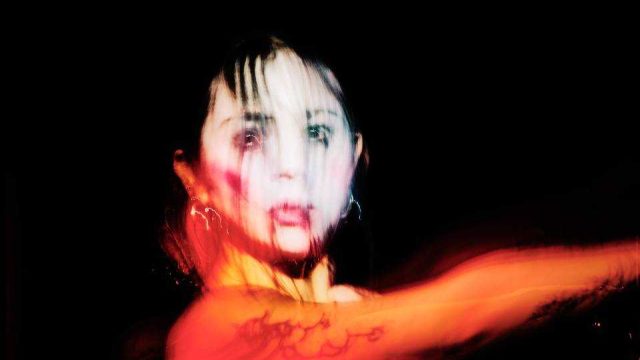
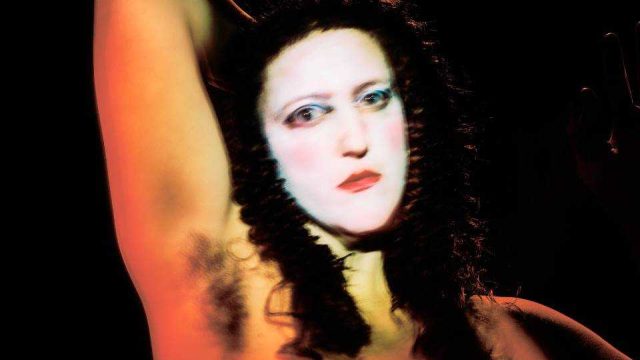
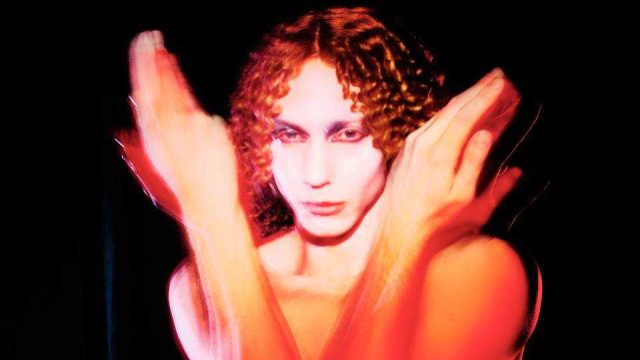
In the shadow of this monumental work, director Benjamin Abel Meirhaeghe and drummer-composer Lander Gyselinck ask themselves what a completely new Sacre might entail today. For his a rite of spring, Meirhaeghe went in search of three women whose portraits he wants to reveal through dance and performance. Sophia Rodriguez, Charly Ange Fogaroli and Courtney May Robertson will thus convey a radically updated narrative about female sacrifice. For the contemporary visual language, Meirhaeghe collaborates with designer Stefan Kartchev, who transforms the performers through his costumes — a mix of found materials and folkloric influences — into futuristic archetypes. Lander Gyselinck takes Igor Stravinsky’s rhythmic experiments as the starting point for his own new music, which he will perform live during the show.

The final production therefore stands apart from the original, while simultaneously building on it. Or rather: it offers both an homage and a correction, a wink and an update. But first, everyone needed to have the reference material clearly in mind. That is why the rehearsal process for a rite of spring began with laying down a rich foundation: during the first two weeks, the performers immersed themselves in Nijinsky’s original choreography and Stravinsky’s music. We met them at the end of those two weeks to hear how that experience had been.

‘The young women are marked by fear, but we want to explore how we can give them strength instead’


SOPHIA RODRIGUEZ: I’m happy with our small group. It doesn’t feel at all like we’re individuals who have to come in and do our own thing, but rather like we’re here to offer things to one another and complement each other. That was especially important last week: we dove deep into the music and choreography, which involves a lot of complex rhythms. You have to memorize all the time changes and constantly keep counting, which really pushed me out of my comfort zone. But I felt incredibly supported by the group.

COURTNEY MAY ROBERTSON: All that counting and analysing — I love it. We’ve also already started developing new material. Each of us was invited to propose ideas for a solo, departing from the theme of sacrifice. We talked with Benjamin, read texts to one another, watched videos and listened to music. Charly and Sophia then responded with a beautiful improvisation. I’m usually quite cautious and analytical by nature, so it was refreshing to see something like that emerge after all the rigorous study.

CHARLY ANGE FOGAROLI: I have to admit I can be a bit nerdy, so I really enjoyed diving into the music. At first it was quite overwhelming: you dance one rhythm with your lower body while your upper body follows a different one. It’s a bit like tapping your hand on your head while drawing circles on your belly with the other hand. Something like that — except your belly is polyrhythmic and nothing makes sense anymore. (laughs) At the end of the day, you’ve learned a lot and you’re struck by a strange sense of gratitude because you’ve had to push your boundaries.
2526 RIT campagnebeeld 2

SOPHIA: Le Sacre du printemps is one of those works you feel like you’ve known your whole life. But now, after working on it for two weeks, I truly realise how incredible the music is. Stravinsky was extremely innovative and daring within European art music, especially rhythmically. We had a great conversation about that with Lander Gyselinck, who pointed out that such rhythms aren’t strange at all in other musical traditions, such as certain forms of African folk music.

COURTNEY: Nijinsky’s movement language is far removed from what I’m used to. It felt a bit like cosplay, which I really enjoyed. Learning such a choreography from Shane Urton (former OBV dancer, ed.) was also new to me. It felt like a fantasy coming true, without me having realised beforehand that it was my fantasy. The footwork, although very different in form, reminds me somewhat of Scottish folk dances. The overall complexity and the ‘unnatural’ quality were new to me, while the minimalism of the movement language provides a beautiful contrast.

SOPHIA: Exactly — it’s a fascinating blend of simplicity and complexity. If there’s one element I’ll take from this choreography into our final performance, it’s the relentless stream of change.

CHARLY: For me, it’s the energy: you’re under high tension for the entire piece. I already had experience with footwork and stamping from previous work, but in this choreography it feels like it never stops. You’re pushed to a point you wouldn’t normally reach; you don’t usually push yourself this hard for this long. It’s incredibly exhilarating, especially when we have to stamp in unison, almost obsessively.

2526 RIT campagnebeeld 3

SOPHIA: I think our sense of group cohesion comes from those two elements: persevering together — in unison. There’s a power in that which could also be the answer to the original story, which carries something very patriarchal. From a group of young women, an old man selects one chosen figure who must be sacrificed for the rest of the world. I think we can look at that differently today. (laughs) The young women are marked by fear, but we want to explore how we can give them strength instead.

CHARLY: During our preparatory research, we also read a poem by the Roman poet Catullus. It suggests an image of fruit allowing itself to rot in order to bring forth a new chapter. I found that idea of sacrifice and transformation very beautiful. That’s also how we’re working now: we immerse ourselves in Stravinsky’s and Nijinsky’s source material and then get to work with it. The original music and choreography have something feverish about them. I’m curious to see what will emerge from that fever dream: madness or perhaps, who knows, a kind of tenderness and healing. The whole process feels very intimate: we sacrifice aspects of the original sacrificial dance, and in doing so we give shape to something new.

COURTNEY: It might sound a bit abstract, but now that we’ve worked with the source material, I have a certain energy in mind that the final performance should radiate. I see something like a fireball or a comet — something that stands out and overwhelms, something that illuminates and potentially scorches. A force of nature that is both magnificent and fertile.

2526 RIT campagnebeeld 4

IN COPRODUCTION WITH TONEELHUIS AND WITH THE SUPPORT OF THE TAX SHELTER MEASURE OF THE BELGIAN FEDERAL GOVERNMENT
vonk performance world creation
|

Antwerp | Gent

a rite of spring

Benjamin Abel Meirhaeghe & Lander Gyselinck

Info and tickets
a5cP6000003aHevIAE-a0bP6000004dGVdIAM

Sign up for our newsletter

Follow us