Opera Ghent: history and special features
Fri, Aug 25, 2023
History
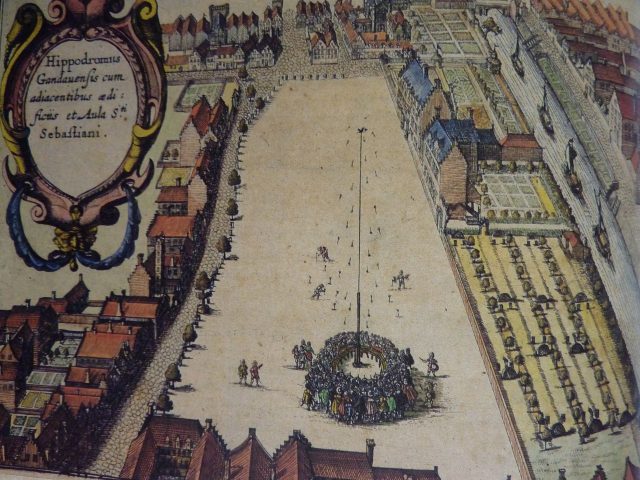
The history of the Ghent Opera is inextricably linked to that of the archers, the Guild of Saint Sebastian. From 1664 onwards, the guild rented out its premises on the Kouter to travelling theatre companies. In 1668, the guild sold part of its land to the city, which had a theatre hall built there in 1698. This first municipal theatre was inaugurated on 31 May 1698 with the opera Thésée by Jean-Baptiste Lully. In July 1706, a permanent company (Coninclijcke Academie van het Musieck) was founded, but a fire destroyed the theatre and the guild premises in 1715. In 1736, the guild bought its land back from the city and commissioned the construction of a new guild house and theatre.
The buildings of the Guild of Saint Sebastian were confiscated after the French Revolution and sold as national property in 1798. In 1821, the city was able to acquire the theatre hall and, a few years later, had a new theatre building erected on the site of the old theatre. Based on the plans of city architect Louis Roelandt—who also built the nearby courthouse—the monumental neoclassical theatre building, the so-called Grand Théâtre, rose up and was ceremonially inaugurated on 30 August 1840. To this day, opera is performed in this magnificent building.
The most recent renovations took place between 1989 and 1993 (restoration of the auditorium, the stage tower and the box block) and between 2002 and 2004 (structural works and façade cleaning). A new dossier is currently on the table for an ambitious renovation to turn the opera house into a new contemporary centre for music and performing arts.
Special features in the Ghent Opera House
Peristyle
The Greek word peristylos means: surrounded by a colonnade.
The cobbled passageway is a striking oval space surrounded by sixteen Doric columns. Copper studs in the floor recall the route that the carriages had to follow from one carriage gate (in) to the other (out).
Auditorium
There are 1,002 seats in the Ghent Opera. The horseshoe-shaped auditorium was decorated by the Parisian painters Philastre and Cambon, the same decorators of the Bourla Theatre in Antwerp. The proscenium arch is framed with wood and panels on which draped red curtains are painted, crowned with the Ghent lion and the Ghent coat of arms bearing the inscription ‘fides et amor’ (‘faith and love’), the city’s motto. The rich ceiling decoration on the wooden domed ceiling shows mythological scenes and portraits from the world of theatre. The monumental chandelier, made by the Ghent company Trossaert-Roelants & Cie, lights up the hall. It has a diameter of 3 metres, is 4.50 metres high and contains 84 light points. The chandelier is decorated with three groups of eight dancing and music-making figurines in gilded bronze.
Stage
The stage is 21.10 metres wide and 13.45 metres deep. The proscenium opening is 11.40 metres wide. The stage tower is 24 metres high. In Ghent, there is still a manual fly system in place, one of the few in Belgium. In the side stage of the Ghent Opera, two workshops are housed: the props workshop and the paint shop, where costumes are dyed.
Salons
The richness of the foyer, ballroom and concert hall reflects the prosperity of the 19th-century Ghent bourgeoisie and highlights the social status of the opera and its visitors. The three rooms are located next to each other on the street side of the building and are directly connected to one another. These “trois salons en enfilade” are 90 metres long, making them longer than the Hall of Mirrors in Versailles, which is 73 metres long.
The ballroom or Redoute Hall owes its name to the Société des Redoutes, which organised its festivities and balls there. Originally, the hall had a ceiling painting featuring clouds, but it was later painted over. The concert hall or Lully Hall is named after Jean-Baptiste Lully. The first opera ever performed in Ghent is said to have been by this Baroque composer. The hall is used for small concerts or performances. The original gas heating system—remarkable for that time—is hidden behind the pillars in the wall.
Renovation
The Ghent Opera will temporarily close its doors in early 2026. After almost 200 years, it is time to transform the classical opera house into a modern epicentre for art and culture. We are doing so with respect for the rich history of this monumental building and with great ambitions for the future. This will not be just a restoration, renovation and new construction project, but a true renaissance. You can read all about it here.