Flanders remembers
Thu, Apr 23, 2026
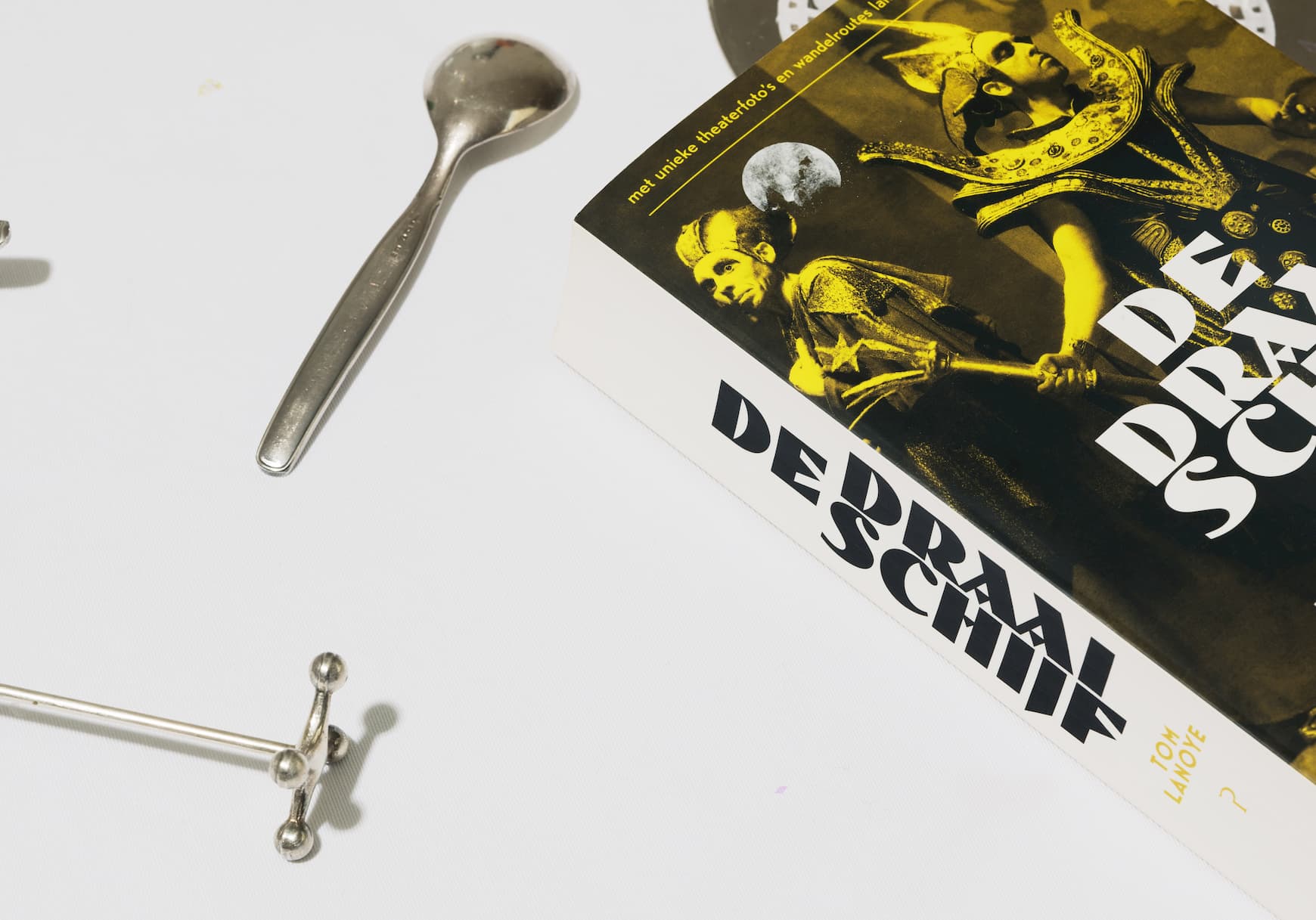
Two pressing questions kept cropping up, time and again, in the years I spent researching and writing De draaischijf – my novel about cultural collaboration during the Second World War in and around Antwerp.
They had nothing to do with the historical facts or their literary treatment.
Sure, there were questions and challenges of that sort too. Plenty of them. For example, to what extent can and should a novelist draw inspiration from the lives of Flemish directors, actresses, collaborators, conductors and members of the resistance? What if he doesn’t strictly adhere to the facts regarding their life stories and their entourages? And is he allowed to simply do as he pleases with all this in the name of poetic licence and fictional creativity?
The answer is, of course, a resounding ‘yes’ and has been confirmed for centuries by countless works of art, not only in novel form. Friedrich Schiller’s Don Carlos, a drama in verse about the 16th-century Spanish tyrant Philip II, formed the basis for Giuseppe Verdi’s opera of the same name (Don Carlos). Historians, to put it mildly, do not always agree with either the spoken or sung stage portrayal of the Spanish despot. Nor do they agree with the depiction of his son Don Carlos, ‘The Infante of Spain’. Schiller presents him as an idealist who is as impetuous as he is sensitive, yet at the same time hopelessly in love with his stepmother, Elisabeth of Valois, who is herself the daughter of the powerful French king and the wealthy Catherine de’ Medici.
Initially, Elisabeth had appeared at the Spanish court as the fiancée of Crown Prince Carlos, but she was soon snatched away from him – as a third wife, no less – by the imperialist tyrant and patriarch Philip, who, it turned out, was a force to be reckoned with on the domestic battlefield as well. In Schiller’s work – not coincidentally, he was a figurehead of the Sturm und Drang movement – this triangular intrigue between father, son and stepmother receives disproportionate attention. Certainly in light of the massive atrocities that Papa Philip had perpetrated at the same time in the rebellious Low Countries. In their bloodlust and fanaticism, these acts are reminiscent of the prolonged reprisals in present-day Gaza, carried out by the apartheid government of the Israeli Prime Minister Bibi Netanyahu.
To historians, the amorous intrigues at the court of a Spanish monarch would, at most, merit a footnote. In the specific case of Philip II, they might perhaps see it as further evidence of his geopolitical ingenuity. In his era, after all, the institution of marriage had nothing to do with passion and puppy love. It was simply the enactment of land grabs by other means. Titles, thrones, land and capital – these were the things one had to merge. Four lips and two hearts, not so much. If you did so anyway, you risked - out of personal sentimentality - harming the interests of state and family. These had to be focused solely on the expansion of power. Even more than religion, the arranged marriage formed the foundation of the European aristocracy.
Yet sensible historians would never dispute the importance and quality of Don Carlos. As a play and as an opera, that is. A work of art is not a history book. It is that very distinction that allows both to come into their own.
That distinction naturally also applies to the ‘history plays’ of Christopher Marlowe and William Shakespeare, about ancient British kings. And by extension to all modern versions of them, such as the TV series The Crown. Or a film like The Favourite, directed by the ever delightfully irreverent Yorgos Lanthimos.
Incidentally, the matter is not limited to protagonists from the distant past. Those portrayed may still be alive and thus have the opportunity themselves to express their approval or – more often than not – their horror regarding an artistic work on the subject of their person. One of the juiciest examples is a film by Ali Abbasi, The Apprentice (2024), in which the young Donald Trump, as a sorcerer’s apprentice, gradually outshines his diabolical idol, Roy Cohn. A corrupt corporate lawyer and the former right-hand man of communist hunter Joseph McCarthy, Cohn helped this senator to prosecute, slander and oust black leaders, human rights activists and homosexuals. At the same time, Cohn himself was a flamboyant queer who, right up to his deathbed, denied that he, as one of the first New Yorkers, was dying of AIDS. (‘I’m not gay. I have sex with men. Those are two completely different things.’) Cohn’s most important life lesson to the young Trump was therefore: ‘Never admit you’re wrong. Never!’
To conclude this already rather long introduction, I would just like to quickly cite a ‘homegrown’ example, De Leeuw van Vlaanderen.
A work of art is not a history book. It is that very distinction that allows both to come into their own
PEDESTALS AND PLAQUES
As the son of a butcher whose father was a proud member of the local Jan Breydel guild, it came as a shock to me a few years ago when several historians, after extensive research, revealed that Jan Breydel, the undisputed leader of the powerful butchers’ guild, did not, in fact, fight in the Battle of the Golden Spurs in 1302.
Hendrik Conscience, our unrivalled literary forefather, had nevertheless assigned Breydel a heroic leading role in his most famous (though not his best) novel, right up to the front lines, as a professional slaughterer of the French. There are also academic sceptics who claim that Breydel was not even a butcher, but that he practised a completely different, thankfully still popular, profession – as a brewer. On top of that, there are historians who claim that three Jan Breydels fought together at the Battle of Groeningekouter near Kortrijk, all descended from one and the same widely branching family. But the real-life, influential Jan is said to have only later stepped into the historical limelight, finally elbowing all his other family members off the stage once and for all.
Who, then, was the real Jan? Historian Jan Dumolyn, who contributed to both the official Canon of Flanders and the TV programme Het verhaal van Vlaanderen (‘The Story of Flanders’), attempted to cut the Gordian knot as follows in Gazet van Antwerpen (23 January 2023). ‘Breydel was certainly involved in the battle, and not just to supply pork to the troops. But Conscience romanticised him. He was looking for a foil for Pieter de Coninck. Compare it to Laurel and Hardy. To highlight a character, you place someone completely different alongside them. The brash butcher who was a master with knives, contrasted with Pieter de Coninck, the calm and sensible weaver.’
This Solomonic judgement has its pros and cons. Bruges’s football temple can confidently retain its heroic name, the Jan Breydel Stadium. The reference to a fierce medieval butcher, who was also a wholesaler of fresh pork, might even help to deter visiting teams and their hooligans.
But the triumphant monument on Bruges’s Grote Markt, which depicts Pieter the weaver and Jan the butcher shoulder to shoulder as they jointly hold a large broadsword, deserves a corrective plaque on its plinth.
It might point out not only that the monument was partly funded at the time by the young Belgian royal family, and perhaps even partly paid for out of his own pocket by that other famous butcher, King Leopold II. The most important note should warn that this is a romantic-nationalist scene, which did not originate from thorough academic research, but from a novel that was once widely read and highly praised.
With a plaque like that, the statue might as well stay put, just like that football stadium, even though there is a wide consensus among historians that Breydel and De Coninck were not always inseparable brothers in arms. Breydel was by no means involved - whereas De Coninck certainly was - in the Brugse Metten (Matins of Bruges), that other world-famous massacre during the Flemish Revolt, a sort of armed intifada that lasted from 1297 to 1305.
A few months before the Battle of the Golden Spurs, in the heart of Bruges, in the dead of night and in a perfectly coordinated operation, the throats of some 120 sleeping occupiers were slit. Because, upon their abrupt awakening, they could not pronounce two words (‘shield’ and ‘friend’) as the people of Bruges do. Let that event also serve as a warning to visiting hooligans. And to anyone, Belgian or foreigner, who has not mastered the subtleties of the Bruges dialect, yet still dares to book an overnight stay in one of our most beautiful Flemish cities.
Even though Breydel was only remotely involved, that bloody night-time attack need not change anything about that statue on Bruges’s market square. Breydel and De Coninck? Let them stand shoulder to shoulder forever. I am, in any case, a supporter of Conscience and therefore welcome the free passage of imagination, in opposition to the autocracy of exact science. At least where our culture of remembrance is concerned. And as long as we continue to clearly distinguish between the two manifestations of our memory. One emotional, the other rational; together: the whole picture. Book and study, statue and plaque.
I welcome the free passage of imagination, in opposition to the autocracy of exact science. At least where our culture of remembrance is concerned. And as long as we continue to clearly distinguish between the two manifestations of our memory. One emotional, the other rational; together: the whole picture. Book and study, statue and plaque
HUMANIORA
Please forgive the above digressions. Whenever I write about Flanders and its history, I do tend to get carried away. Now back to the two questions posed at the start of this piece. As I mentioned, they kept dogging me while I was working on De draaischijf.
The first question challenged a prejudice that I had, until then unconsciously, harboured regarding art. All art. Call it naivety or a foolish blind faith in one’s own convictions, but I had always assumed that the essence of art would ultimately, for everyone, coincide with its time-honoured claims. I had become acquainted with these, initially with some adolescent reluctance, at the Catholic school where I was educated. In a classical/humanities secondary education programme that was then still simply called ‘de humaniora’. A term that stood for something and was not just empty jargon intended to impress colleagues or journalists short on Latin.
Humanior. More human. That was what you were to become, as an adolescent. Thanks to a general education that sought to nurture you as broadly as possible and help you blossom. Instead of rushing you through as quickly and docilely as possible to prepare you for the labour market, as is all too often the case nowadays, with the complicity of the relevant ministries. Education today? It has become an investment in quantifiable profitability: the child as a start-up. Founded by their investing parents, to be frenetically onboarded by the time they reach thirty, often enough completely washed up after a first burnout at forty. Do the math.
I’ve recently heard of cases of students who, despite attending prestigious schools, graduated having had to write barely one essay a year, having received hardly any lessons in literature and never having taken part in a school play. Mathematics and business management lessons, on the other hand, were expanded year after year. Over time, such an extreme economic straitjacket takes its toll on an entire community. You cannot, with impunity, discourage individual creativity under the pretext that our collective labour productivity will benefit wildly from it later on. In the long term, productivity actually benefits more from playful, even contrarian imagination than from slavish compliance, which leads to boredom and stagnation. Call it nostalgia or self-glorification, but you cannot, without consequences, stifle the intangible ambitions that education and the fine arts still possessed when I first encountered them as a youngster.
Put succinctly and undoubtedly somewhat predictably, those intangible ambitions boil down to this: the good, the beautiful and the true. Three ideals, each unattainable in its own right, both physically and mentally, at least if you constantly set the bar at its highest level.
But the pursuit, so to speak: the act of jumping itself, is a more important lesson than trying, time and again, to clear that same lifeless bar without touching it. That is precisely the difference between the child as an industrial start-up and the child as a unique, unruly spotty-faced troublemaker. Let those burgeoning young upstarts jump about haphazardly. Over, under, beside or, if need be, right onto that bar. Encourage them, absolutely. Point them towards the tried-and-tested paths and set run-up routes. But give them enough freedom to stubbornly deviate from them and jump or dive or fall however they please. And then see where, to their own and everyone else’s surprise, they end up after all.
I am well aware that this is a far too idyllic picture of the situation, certainly coming from an aging, childless disco queen. But I prefer such a poetic evocation to a dry pedagogical formula. Moreover, the poetry of it helped me to put off my first unpleasant conclusion for just a little longer. But here it comes.
I had always laboured under the belief that the knowledge and study of classical, modern and contemporary culture would inevitably foster greater humanity. Universal and timeless masterpieces, I thought, were in themselves an elixir against fascism, delusions of superiority and the humiliation of groups. Against the persecution of minorities, brutal deportations and berufsverbot. Against all abuses of power committed in the name of racial purity and the ideology of Blut und Boden.
It was because they feared deviant freedom: that’s why – I thought – the Nazis threw daring novels and disconcerting studies onto the pyre. That’s also why – I thought – the Führer and his thugs accused so many brilliant artists of cosmopolitanism, decadence and betrayal of the Volk with a capital ‘V’. And for the same reason – I thought – all autocratic and religiously fanatical regimes still oppose ‘degenerate art’. They see it as a threatening vaccine. Against the virus they so eagerly embody and which they wish to let overrun everything they dislike.
If only it were true that art was, by definition, a vaccine. If only it were true that all artists were at least an indicator of symptoms, and perhaps even a cure, for the black fever of anti-democracy. It’s not, and it’s worse than that.
Quite a few of my fellow artists at the time of the Second World War legitimised the antidemocratic virus, and not merely by paying lip-service to the New Order. They also actively helped to disseminate it. Through salons and key positions they continued to hold, serving the occupier without a second thought. Even when other colleagues were thereby deprived of their livelihoods or deported.
They themselves did not get deported. They generally got promotions and higher salaries.
They remained theatre directors or became chief conductors; they remained directors-general of education or became heads of the national radio broadcaster. They adopted the occupier’s jargon, they echoed their propaganda, they hewed to their ideological obsessions, and for most of them that required no extra flexibility. They had already had ample opportunity to acquire a taste for Black haberdashery in the 1930s. Often thanks to so-called cultural societies that had received bribes from Nazi Berlin.
Once the occupation was a reality, they went all out. As teachers, they began their high school humanities lessons with the Hitler salute; as headmasters, they placed a bust of the Führer on the mantelpiece in their offices; as department heads, they dismissed Jewish subordinates; and as managers, they also helped purge the bar associations and universities of ‘elements alien to the people’.
They turned a blind eye to the Antwerp round-ups in the summer of 1942. They did, however, continue to conduct Mozart and Wagner at the Flemish Opera. Clad in the uniform of the Algemeene SS-Vlaanderen, which they themselves had helped to found. And, in that uniform, they accepted the applause of the large audience with deep bows.
Nevertheless, such collaborators claimed they were still acting under the triple banner that I, too, had always held in such high regard: the good, the beautiful and the true. They simply interpreted those aspirations differently. Anything that bolstered their political convictions was, by definition, good, beautiful and true. In fact, it was even worse than that. The very masterpieces I virtually worshipped, from the ancient Greeks to Virgil and Ovid, Hadewijch to Erasmus, Dante to Cervantes, Tijl Eulenspiegel to Reynard the Fox, you name it – all those masterpieces they cited and extolled as proof of Western superiority in the hierarchy of races and peoples. Moreover, they saw in them their very own personal mentors, the foundation of their artistic raison d’être.
Just as I and my kindred spirits do. Whereas we, on the contrary, reject illiberal and colonial ideologies, and find in those very same masters the justification for our aversion.
That realisation caused no small mental short-circuit. All the more so because, in all honesty, we must admit that, whether they were writers, painters or composers, our collaborating artistic colleagues did not necessarily produce worse art.
That does not apply to Hitler himself. He was a landscape painter, but thankfully more of a dabbler than a genius or even a competent craftsman. Unfortunately, the same cannot be said of – for the sake of convenience, I shall limit myself here to a single foreign example – the Norwegian writer Knut Hamsun. He was indeed a literary genius, even a forerunner of modernism and of what would later be called the stream of consciousness. His novels, such as Growth of the Soil or Hunger, have proved just as influential as the works of Henrik Ibsen or Fyodor Dostoevsky. At the same time, Hamsun was a passionate supporter of the Nazis and thus also of Vidkun Quisling, the collaborating Norwegian Prime Minister who, a few months after the liberation and a swift trial, would meet his end before a firing squad. The elderly Hamsun himself would, without trial, first be forcibly admitted to a psychiatric institution and later convicted after all. Sentenced not to death, but to a sky-high fine. He never showed any sign of guilt or shame. Rightly so, according to some revisionist fans. They insist that he was merely a principled contrarian and a poser. Such is often the case with fans of overt collaborators.
As far as Hamsun is concerned, however, that claim is difficult to sustain. In 1943, he visited Propaganda Minister Joseph Goebbels and subsequently sent him, by post, the medal of honour that he had been presented in 1920 at the Stockholm Concert Hall, together with the Nobel Prize in Literature, out of admiration for Hitler’s achievements. In other words, it was nothing new when, in January 2026, the Venezuelan opposition leader María Corina Machado donated her Nobel Prize medal to a foreign head of state, Donald Trump. Although in that case, it was not the Nobel Prize in Literature, but the Nobel Peace Prize. In both instances, it was a spectacle as mind-boggling as it was mortifying.
As late as 1943, Hamsun also paid a visit to Hitler himself at his ‘Eagle’s Nest’, Villa Berghof in the Obersalzberg. The meeting is said to have been awkward, given Hamsun’s profound deafness and the Führer’s staccato manner of speaking. The fact that Hamsun kept interrupting his host also did little to improve the atmosphere. Hitler soon presented his guest with a gold swastika medal and cut the meeting short.
Shortly after Adolf’s death, Knut wrote a eulogy that read more like a tribute than the lament of a spurned admirer or the jest of an incorrigible poser. ‘Hitler was a warrior. A warrior for humanity and a prophet of the gospel of justice for all peoples.’
They turned a blind eye to the Antwerp round-ups in the summer of 1942. They did, however, continue to conduct Mozart and Wagner at the Flemish Opera. Clad in the uniform of the Algemeene SS-Vlaanderen, which they themselves had helped to found. And, in that uniform, they accepted the applause of the large audience with deep bows
REVERSE ICONOCLASM
In Flanders, it was chiefly a third-rate poet like Ferdinand Vercnocke who composed elegies to the Führer while he was still at the zenith of his power. ‘Artist-statesman, visionary, man of action,’ is how Vercnocke began one of his paeans. ‘Commander and hero, man more than man / You have not conquered us, but liberated us.’
Another literary lightweight, who was extolled in collaboration-minded circles as if he were Voltaire and Jean Racine crammed together in a single cassock, was curate Cyriel Verschaeve. As a priest-poet, he extolled the spiritual kinship and superior culture of all members of the Greater Germanic peoples. And as a tireless advocate of the Flemish Legion, which supplied cannon fodder for the Eastern Front, he too met with high-ranking Nazis on several occasions. Among them was Heinrich Himmler, just under a year before the German surrender. While the flying bombs had already claimed four thousand lives in liberated Antwerp, Verschaeve attempted to convince the SS-Reichsführer, who was also the architect of the Final Solution, to save Western civilisation from ruin after all, by finally reconciling Christianity with National Socialism. Himmler, too, it is said, cut the meeting short.
There were also prominent Belgian writers who colluded with the Jerries. The most bitter example is Filip De Pillecyn, often and not without reason referred to as ‘the prince of Flemish letters’. He was once a staunch pacifist and fierce critic of Belgian colonialism. Later, he also wrote books such as Mensen achter de dijk, an unjustly forgotten masterpiece, which places him in the Flemish literary pantheon alongside greats such as Gerard Walschap and Louis Paul Boon.
He wrote that masterpiece in prison, where he was held from 1945 to 1949. In fact, he had been sentenced to a full ten years, as one of the most outspoken cultural pioneers and advocates of the New Order, as founder and/or editor of several pro-German magazines, and above all as Director-General of secondary education for the whole of Belgium, under whose responsibility Jewish pupils and teachers had been purged.
Like Knut Hamsun, De Pillecyn also met Goebbels, at the latter’s invitation. This was in 1941 during a free propaganda trip to Germany, together with Dutch and Flemish colleagues. The aim was to strengthen cooperation between the Third Reich and all Dietsch (Dutch-Germanic) artists by establishing cultural chambers and by promoting a Greater Germanic Europe, with its associated National Socialist foundations, including in cultural terms.
The temptation is great to delve deeper into each of these three cases — Vercnocke, Verschaeve and De Pillecyn. But that would be going too far. I only need them here to illustrate the second question that nagged at me while working on De draaischijf. It is a question that not only artists, journalists or politicians, but all citizens might ask themselves. ‘What would I myself have done, in those wartime circumstances?’
The Resistance Museum in Amsterdam – Antwerp is still waiting for such an institution – is mainly visited by final-year secondary students, and upon entering, it immediately presents them with three possible answers. ‘The Nazis have occupied your country – what do you do? Collaborate, join the resistance, or keep quiet and not get involved?’ It was perhaps this last option that most Flemish artists chose. The great Willem Elsschot was one such individual. Yet he was not spared criticism for it. Because of his silence, but even more so because of the sympathies he did eventually express, shortly after the war, and long after the repressie (prosecution and punishment of collaborators). That process was, incidentally, more accurately termed ‘denazification’ in the Netherlands and Germany. Despite the enduring admiration for his work, those post-war gestures were held against him by many authors and columnists. Johan Anthierens, for example. And also Jeroen Brouwers, who, as a three-year-old child in Java, had been taken away with his mother to the notorious Tjideng internment camp, set up by the Nazis’ Japanese allies.
‘Elsschot’s irreproachable conduct during the German occupation of Belgium [is a fact]’, wrote Brouwers in ‘Het Vlaamse vlakgom’ (‘The Flemish eraser’)’, a lengthy article that first appeared in De Groene Amsterdammer (3 April 1996) and was later included in numerous anthologies. ‘But afterwards? Elsschot’s verse on [the collaborator sentenced to death] August Borms, his verse for [the rehabilitated collaborator] Edgar Boonen, his veneration of [the diehard collaborator] Cyriel Verschaeve, his letter to [the later founder of the Vlaams Blok] Karel Dillen: each and every one is a regrettable misstep.’
This was followed by Brouwers’s often-quoted final verdict on Elsschot. The admirer on the grand master, the craftsman on the shining example, the writer on his colleague: ‘One can also be wrong after the war.’
I don’t know about you, but I hesitate to speculate on what I would have done back then, as a citizen and as an artist. Imagination doesn’t work retrospectively. Who can be certain how they would have reacted, face to face with true repression: that of the New Order? Confronted with social exclusion and the threat of violence? Hounded by the most fanatical Black Shirts, with their coercive demands regarding censorship and compulsory solidarity? Deep down, every person is a hero, until reality sets in. I would have resisted the temptation to collaborate, or so I tell myself. But actually engaging in resistance? Wouldn’t I simply have been too cowardly for that?
This, however, I do know for certain. Today, we lack more than a resistance museum in the city where resistance fighters played a crucial role: they helped ensure that Western Europe’s most important transit port fell intact into the hands of the Allies. While those same resistance fighters had been forced to watch, powerless, for years as more than thirteen thousand five hundred Jewish fellow citizens were deported, just like thousands of ‘enemies of the Reich’ and political prisoners. Most of them would not survive the war.
What we strangely lack, apart from such a museum, not only in Antwerp but throughout the country, are memorials such as the statue of Breydel and De Coninck in Bruges. Monuments and commemorative plaques which, at long last and in many symbolic public places, pay tribute to the Flemings who effectively did dare to join the resistance during the Second World War. Taking up arms if they had to, and with the bloodshed to show for it. Just as that butcher and that weaver did in their day.
A certain romanticism could well be incorporated here. Realism is rarely a priority in statues. So let them pose shoulder to shoulder too. Whether they were actually linked together ‘in real life’, or placed side by side for the sake of the collective narrative. Namely: that there were also many Flemings who resolutely and categorically opposed the German oppressor, at the risk of their own lives.
I don’t know about you, but I hesitate to speculate on what I would have done back then, as a citizen and as an artist. Imagination doesn’t work retrospectively. Who can be certain how they would have reacted, face to face with true repression: that of the New Order?
The advantage is that such statues will require few additional warning signs. The inscription ‘Heroes of the Resistance’ will suffice. Alongside, of course, their names, their dates of birth and death and – crucial as the ultimate safeguard against forgetting – the manner in which they were killed. Executed, hanged, beheaded, tortured to death, gassed, died of exhaustion, shot while fleeing, a dubious fall from a window…
Perhaps our Ministry of Education should lend its support to such a campaign of reverse iconoclasm, joining forces with the Ministry of Tourism for the occasion. For it’s not only in the institutions that have succeeded our former humaniora schools that the lack of general knowledge is rampant, certainly when it comes to the Second World War. In our region, this knowledge often remains too fragmentary and deliberately vague. While we have abundant historical material at our fingertips to fittingly commemorate and honour quite a few of those Flemings.
Antwerp | Gent
De Draaischijf
Steven Prengels / Koen Tachelet / Peter Van den Begin / Tom Lanoye